EP051 · Main episode
What Changes After the Conference?
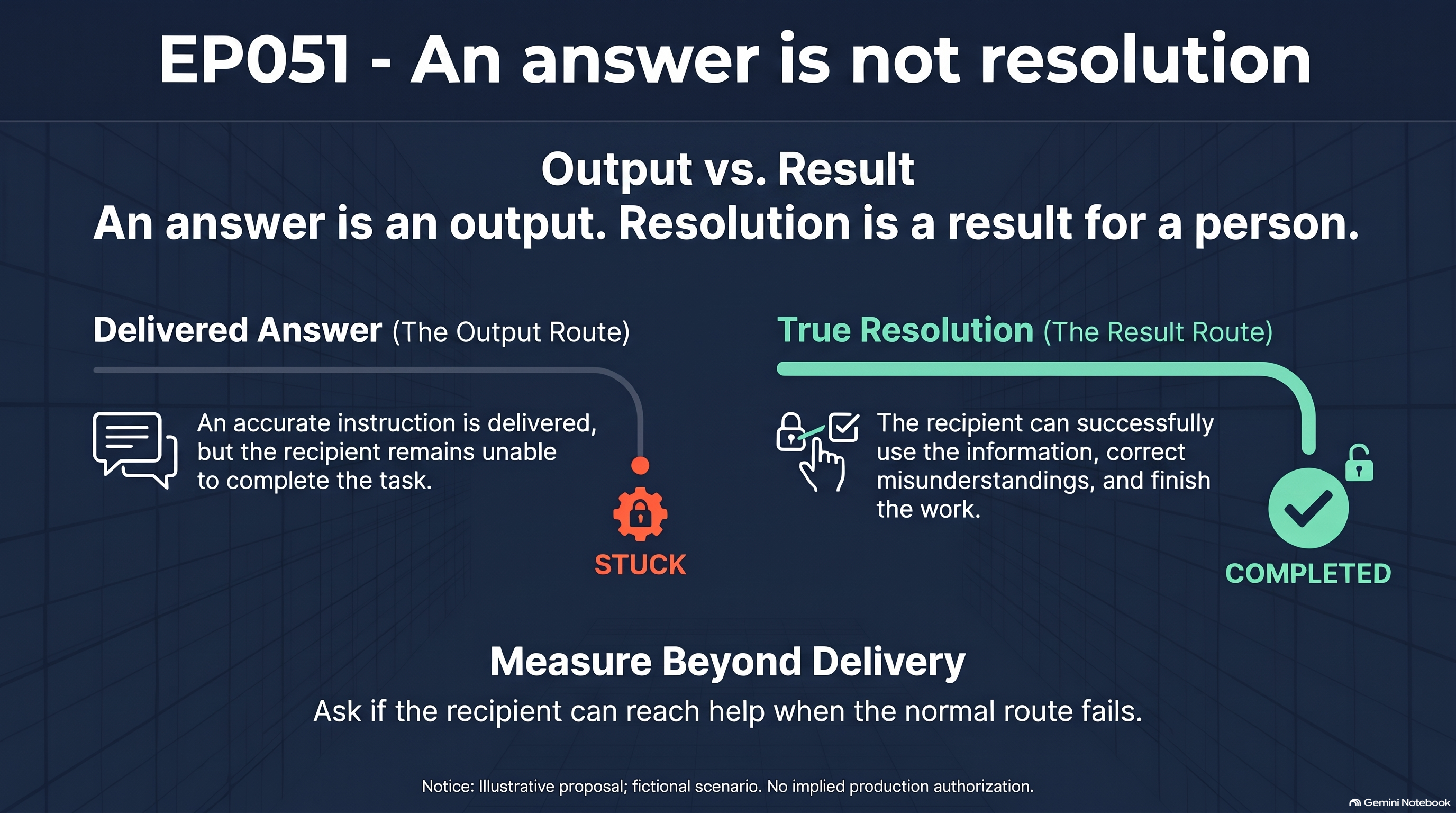
After Gartner Orlando, turn attention, coaching and AI value-risk discussions into one practical service improvement. A paper-first exercise asks whether the work became better for someone, not merely faster.
- Published
- Oct 26, 2026
- Runtime
- 18m 29s
- Record
- Source-backed notes
Complete episode file
Notes, chapters, and evidence
The full editorial record lives here. Open only the section you need, without leaving the Desk.
Episode notes3 sections · 3 release notes
Original release summary
- Attention to the person receiving a service.
- Time and coaching to develop judgment.
- An honest account of AI value and risk.
Overview
Episode 51 of AI Change Desk with Michael Hanna-Butros Meyering.
After attending Gartner IT Symposium/Xpo in Orlando, Michael connects three themes from his session notes: attention to the person receiving a service, time and coaching to develop judgment, and an honest account of AI value and risk.
A hospitality story, a leadership conversation and Gartner's published research lead to one practical question: did the work become better for someone, or did the organization simply produce more of it?
In This Episode
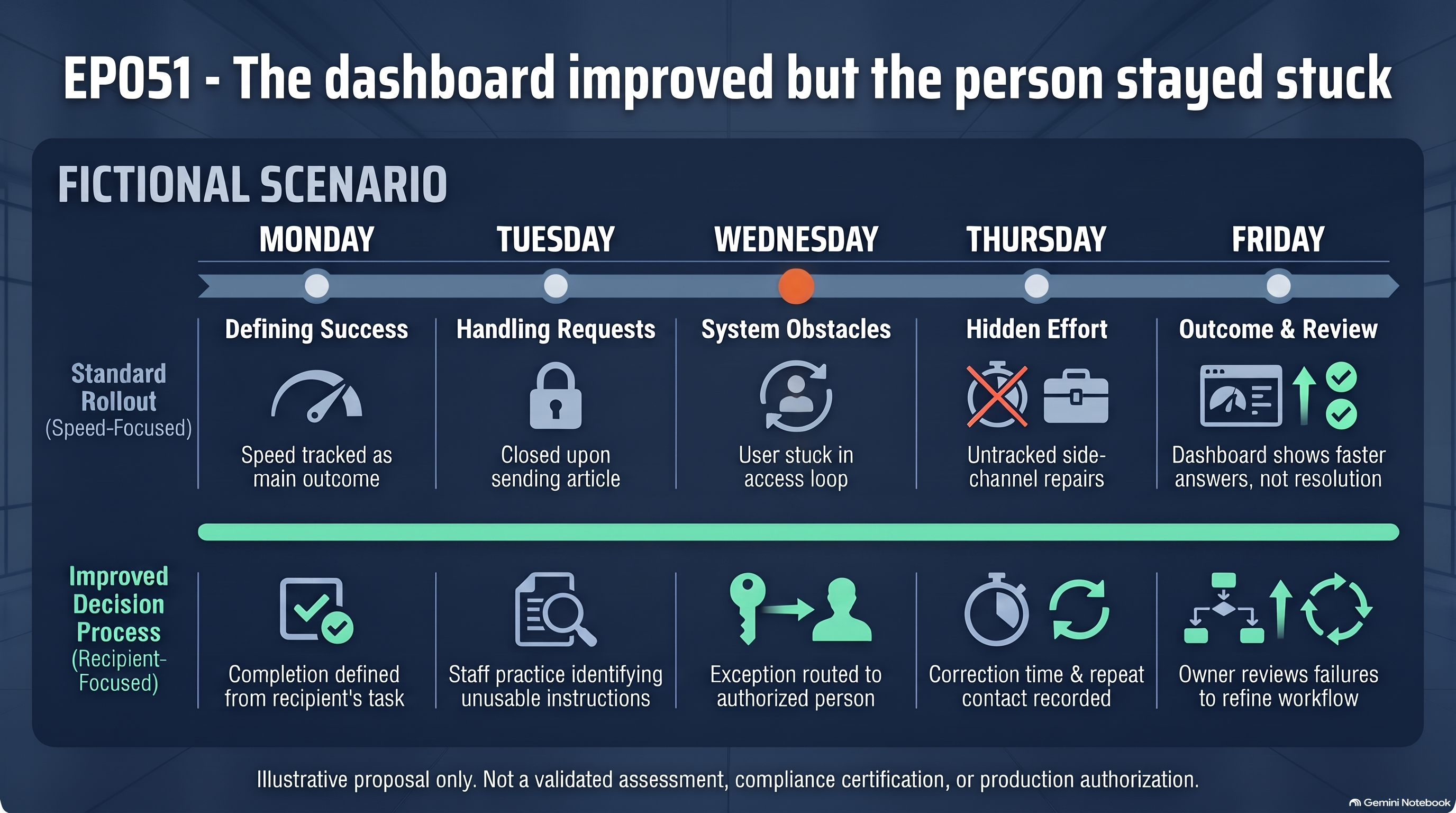
The access-support scenario is fictional. The exercise is editorial guidance, not a validated assessment, compliance certification or permission to deploy a production change. Conference observations are not a survey of attendees or peers. Gartner's reported survey result is attributed self-report, not an independent audit.
- Why a technically correct answer can still leave someone unable to finish a task.
- Why permission to experiment is not the same as time and support to learn.
- How to distinguish faster responses from a better overall service experience.
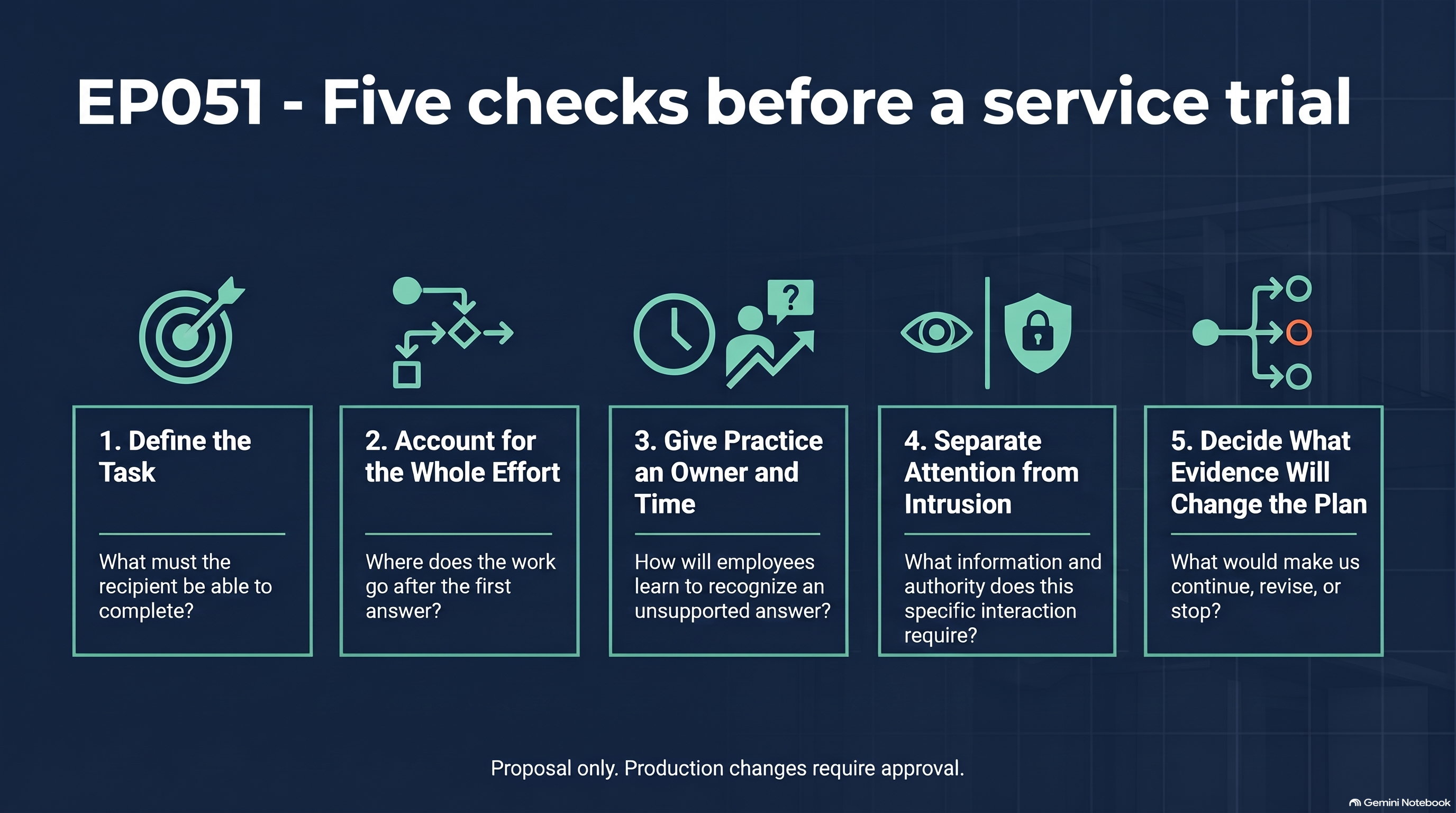
- A proposed 45-minute, paper-first exercise for improving one service interaction.
Source Context
The symposium took place October 19-22, 2026. Public source claims were rechecked October 26. Multiple Gartner pages belong to the same source family; they are not independent corroboration. Guidara's TED account is an earlier telling of his story, not a new event.
Chapters10 markers
Select a chapter to start that moment in the embedded player.
Original release timeline
Sources7 records
Disclosure and questionEditorial record
Disclosure
Quick disclosure before we start. AI-assisted tools were used in parts of the research and production workflow. Final editorial judgment, risk posture, and release approval stayed human-led. This is operational guidance, not legal advice. These are my opinions and are not representative of any organization. One additional disclosure as the Desk evolves. My current role includes privacy work, so you will hear me pay closer attention to purpose, access, retention, deletion, and accountability. I will not discuss nonpublic work here. These are my personal views, and they do not represent the State of Oregon or any other organization.
Listener question
Did the work become better for someone, or did the organization simply produce more of it?
Companion resources4 downloads