EP031 · Main episode
Memory Control Plane Check
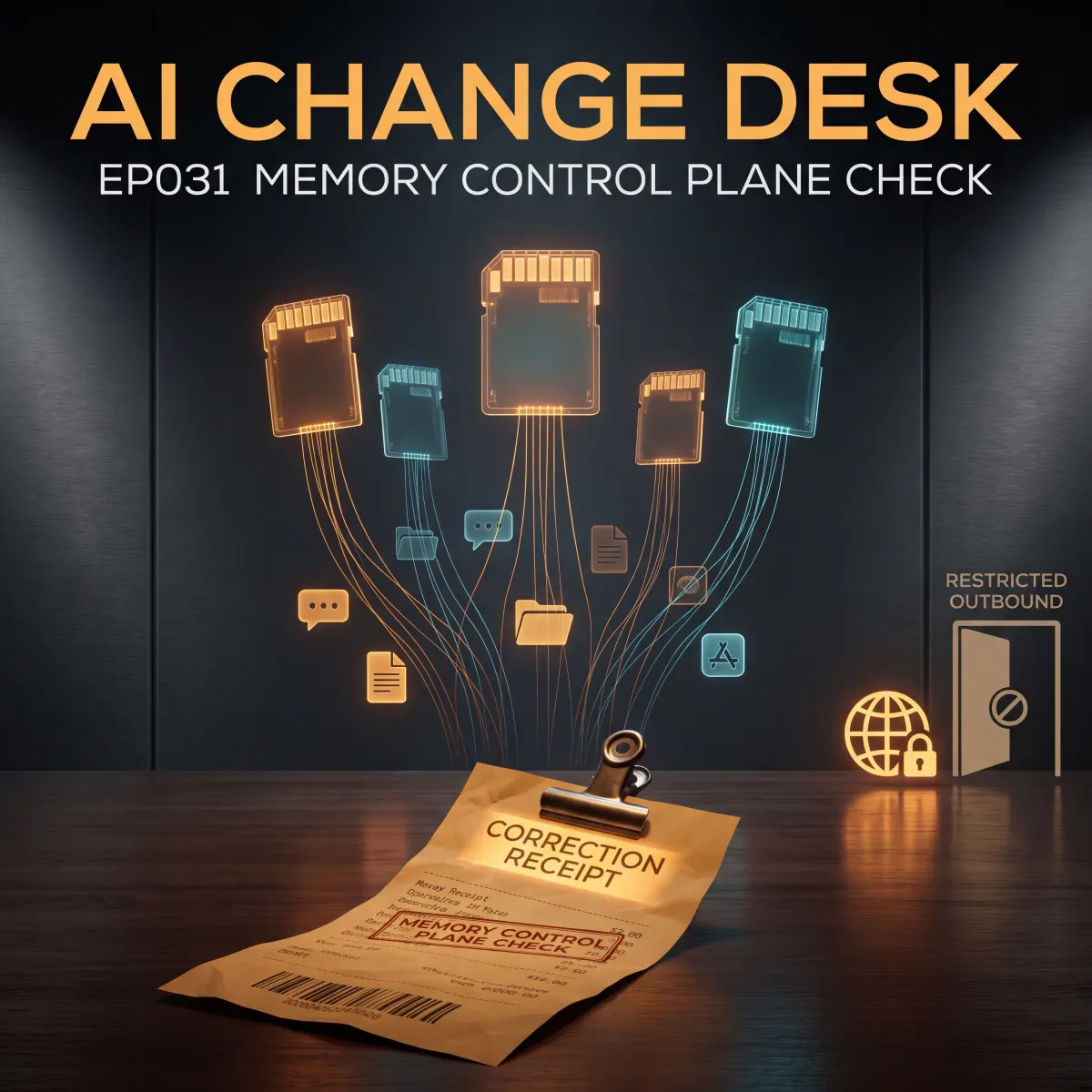
AI memory is becoming more useful, but usefulness creates a new operating surface. If the system can carry context forward, teams need a memory control plane: summary, source, correction, deletion, sensitive-work mode, and disclosure.
- Published
- Jun 8, 2026
- Runtime
- 20m 57s
- Record
- Source-backed notes
Complete episode file
Notes, chapters, and evidence
The full editorial record lives here. Open only the section you need, without leaving the Desk.
Episode notes3 sections · 3 release notes
Original release summary
- What changed: If AI memory is becoming more capable, operators need controls for what is remembered, where it came from, how to correct it, how to delete the source, when to restrict outbound tools, and when to disclose AI-shaped work.
- Why it matters: this changes operational decisions, risk posture, and team adoption.
- What to do next week: assign an owner, set clear guardrails, and run a short training pass.
Overview
AI memory is becoming more useful, but usefulness creates a new operating surface. If the system can carry context forward, teams need a memory control plane: summary, source, correction, deletion, sensitive-work mode, and disclosure.
In This Episode
- Why better memory is not just personalization; it is source-of-truth pressure.
- What OpenAI's June 4 memory rollout changes for operators.
- Why memory summaries, source tracing, correction, and deletion paths matter.
- How Lockdown Mode fits sensitive browsing and hostile-input workflows.
- Why audience disclosure still belongs in the release workflow.
- A 45-minute memory-control-plane check for Monday teams.
Operator Question
What would have to be true for your team to trust remembered AI context in production work?
Chapters10 markers
Original release timeline
Sources6 records
Disclosure and questionEditorial record
Disclosure
AI-assisted tools were used in parts of the research and production workflow. Final editorial judgment, risk posture, and release approval stayed human-led. This is operational guidance, not legal advice. These are my opinions and are not representative of any organization.
Listener question
What is one AI-related decision your organization keeps postponing right now?
Companion resources1 download
Download the episode resource.
Use the companion Word document when you want the signals, decisions, and assignments from this episode in one place before the meeting starts.
- Key signals and implications in a quick-review format.
- The actions to assign this week, with space to name owners.
- A working sheet for due dates, evidence, and follow-through.
Best Place In The Flow
Put it between listening and action: after the episode lands, before the handoff starts, or during the meeting where assignments get made.
- Use the workbook when someone wants the operational takeaway in under two minutes.
- Use the worksheet when the conversation shifts from analysis to ownership.
- Keep the transcript nearby only when you need fuller context or direct phrasing.