EP052 · Main episode
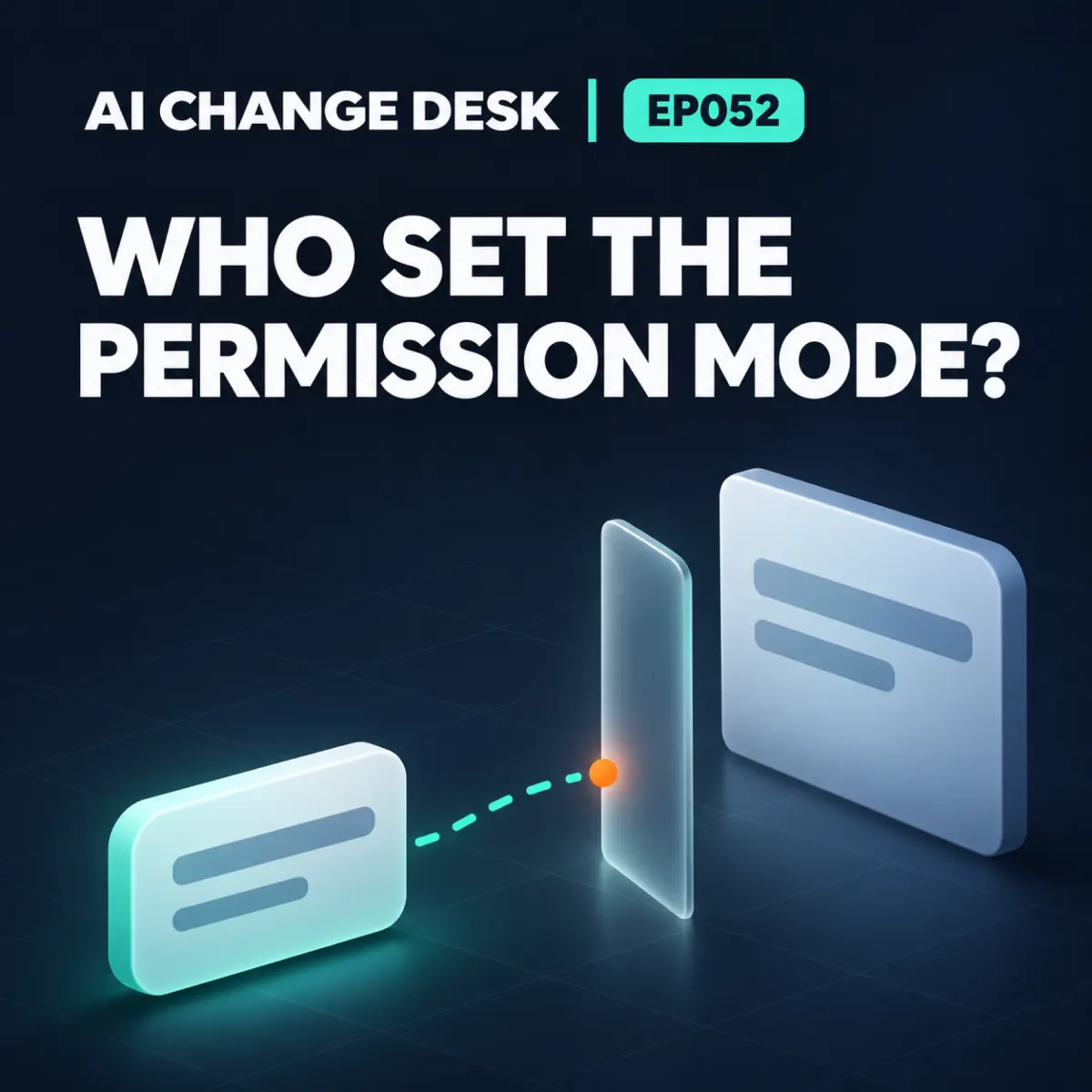
Who Set the Permission Mode?
A task request, an approval decision and an enforced boundary are different things. Prepare one paper-only permission check before proposing a bounded AI trial.
- Published
- Nov 2, 2026
- Runtime
- 18m 32s
- Record
- Source-backed notes
Complete episode file
Notes, chapters, and evidence
The full editorial record lives here. Open only the section you need, without leaving the Desk.
Episode notes3 sections · 5 release notes
Original release summary
- Why approving a task is not blanket approval for its intermediate actions.
- The unresolved difference between two GitHub descriptions of managed ask rules.
- Why reasoning about a useful action and controlling access are separate concerns.
- Why a recorded policy verdict does not by itself demonstrate prevention.
- A 45-minute, paper-only exercise to prepare a bounded trial proposal.
Overview
Episode 52 of AI Change Desk with Michael Hanna-Butros Meyering.
A request to correct a library's opening hours sounds simple. But who may approve the assistant's next action: the person, a fixed rule, or another model?
GitHub's assisted-permissions announcement and connected cloud workflow provide the lead for this week's distinction: a task request, an approval decision, and an enforced boundary are three different things. NIST's proposed agent-identity principles and Google's preview policy documentation add two supporting perspectives.
In This Episode
The community library, staff and exercise records are fictional. No library system or vendor permission behavior was tested. The GitHub documentation difference is unresolved, not a demonstrated bypass. NIST's tenets are proposed principles, not a binding rule or judgment about a vendor. Google's feature is in preview. The exercise is not deployment permission or a safety certification.
- Why approving a task is not blanket approval for its intermediate actions.
- The unresolved difference between two GitHub descriptions of managed ask rules.
- Why reasoning about a useful action and controlling access are separate concerns.
- Why a recorded policy verdict does not by itself demonstrate prevention.
- A 45-minute, paper-only exercise to prepare a bounded trial proposal.
Source Context
Public primary-source claims were rechecked November 2, 2026. The GitHub pages belong to one source family; NIST and Google do not independently verify GitHub's runtime behavior. The Google guide's October 30 update is not a launch date.
Chapters5 markers
Sources6 records
Disclosure and questionEditorial record
Disclosure
Quick disclosure before we start. AI-assisted tools were used in parts of the research and production workflow. Final editorial judgment, risk posture, and release approval stayed human-led. This is operational guidance, not legal advice. These are my opinions and are not representative of any organization. One additional disclosure as the Desk evolves. My current role includes privacy work, so you will hear me pay closer attention to purpose, access, retention, deletion, and accountability. I will not discuss nonpublic work here. These are my personal views, and they do not represent the State of Oregon or any other organization.
Listener question
Who may approve the assistant's next action: the person, a fixed rule, or another model?
Companion resources2 downloads
The 45-Minute Permission Check
A paper-only exercise that separates the task, approval decision and enforced boundary.
- Use invented records; do not operate a live system.
- Name the task owner and human publication owner.
- Finish with a bounded proposal and an evidence plan.
Before any live trial
Ready for review is not permission to execute or publish.
- Hold unresolved behavior essential to your proposed setup.
- Give each evidence gap an owner and next action.